





Kualitee for Telecom
Test management built for telecom QA teams managing software releases across OSS, BSS, billing, and network systems.
At telecom scale, a billing defect does not affect one customer. It affects millions. Your QA process needs to match that responsibility.
Dev & CI/CD Tools
Behind the Platform
Across Every Release
Why Telecom QA Teams Choose Kualitee
Telecom software releases span multiple systems, multiple teams, and millions of end users. Kualitee gives your QA function the visibility and structure to manage that complexity without losing control of quality.

Full Visibility Across OSS and BSS Testing
Organise test suites by system, OSS, BSS, billing, CRM, network management, and track every cycle independently. QA managers see coverage and defect status across all systems in one place, not spread across tools and spreadsheets.

Release Confidence at Telecom Scale
Track pass rates, defect density, and test coverage per release across every system your team touches. Dev leads and QA managers see the same data. No release moves forward on incomplete information.

Structured Workflows Across Distributed Teams
Telecom QA teams often span multiple locations and vendors. Kualitee gives everyone a shared system of record for test cases, defects, and release sign-offs. Nothing gets lost between teams.

AI-Assisted Testing with Hootie
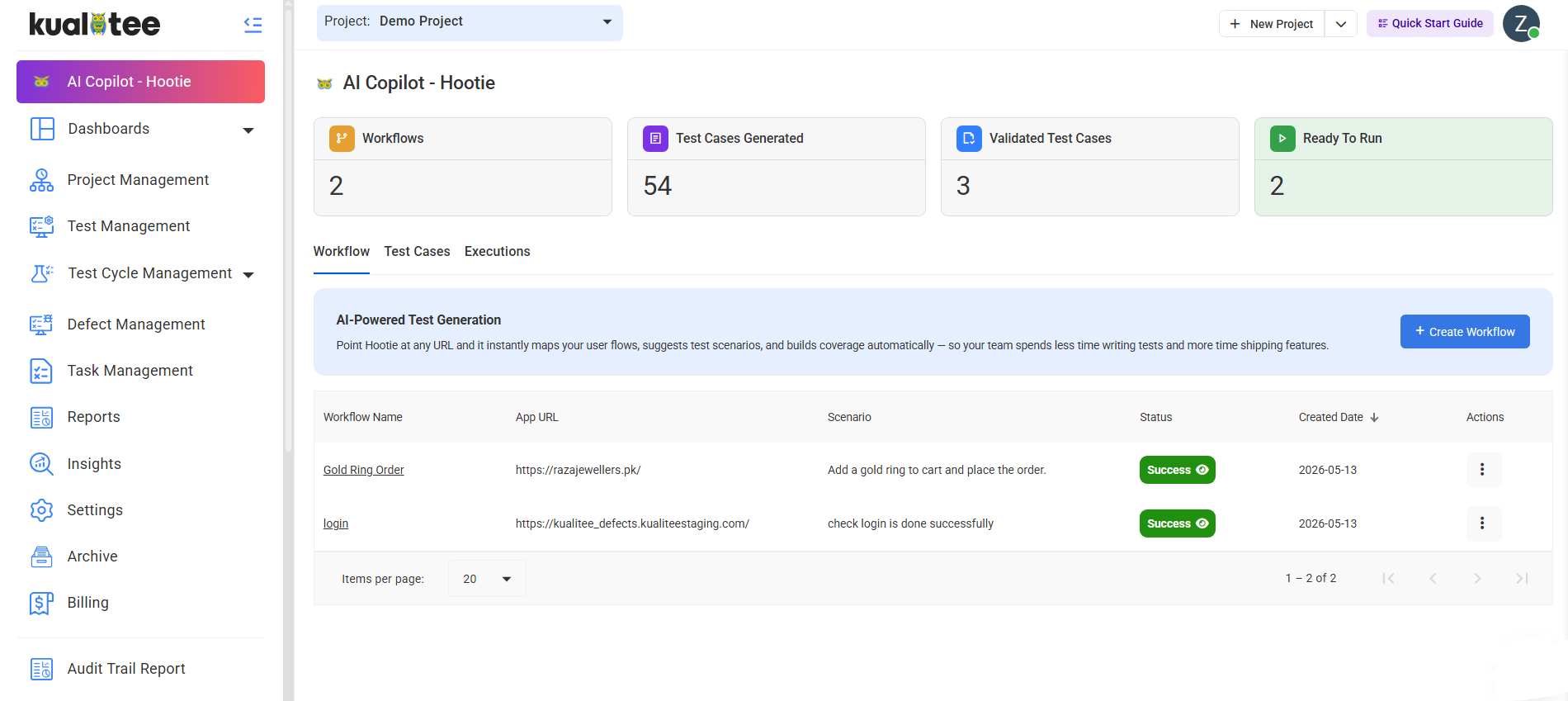
Hootie helps your team generate test cases from requirements, identify coverage gaps across complex telecom workflows, and flag high-risk areas before a release. Faster coverage without cutting corners on quality.
From Complex Systems to Controlled Releases
Kualitee fits into how telecom QA teams already work. Here is how operators use it across their software release cycles.
Map Requirements Across Every System
Create or import requirements for each telecom system, OSS, BSS, billing engine, network management platform, and digital channels. Every test case written from this point is tied to the system and requirement it covers.
Build Test Suites by Domain
Organise test cases into suites by telecom domain. Billing regression, network provisioning, subscriber management, roaming, 5G service activation. Each suite runs on its own cycle with independent tracking.
Run Cycles with Full Traceability
Execute within Kualitee or sync results from your automation framework. Every result is logged against the test case, the build, and the tester. QA managers see live progress across all suites simultaneously.
Track Defects Across Systems and Teams
Every defect links to the failing test case, the affected system, and the team responsible. No defect gets lost between OSS and BSS teams, vendor teams, or geographies. Resolution is tracked end to end.
Sign Off Releases with a Complete Record
Before any release, generate a coverage report across all systems. Document what passed, what failed, and what was deferred with formal risk acceptance. Every release decision is on record.
Every release your telecom QA team ships comes with a complete, traceable record across every system it touched.
Frequently Asked Questions
Your Next Audit Should Be the Easy Part
Every test your team runs becomes part of a permanent, regulation-ready record. Start today.