



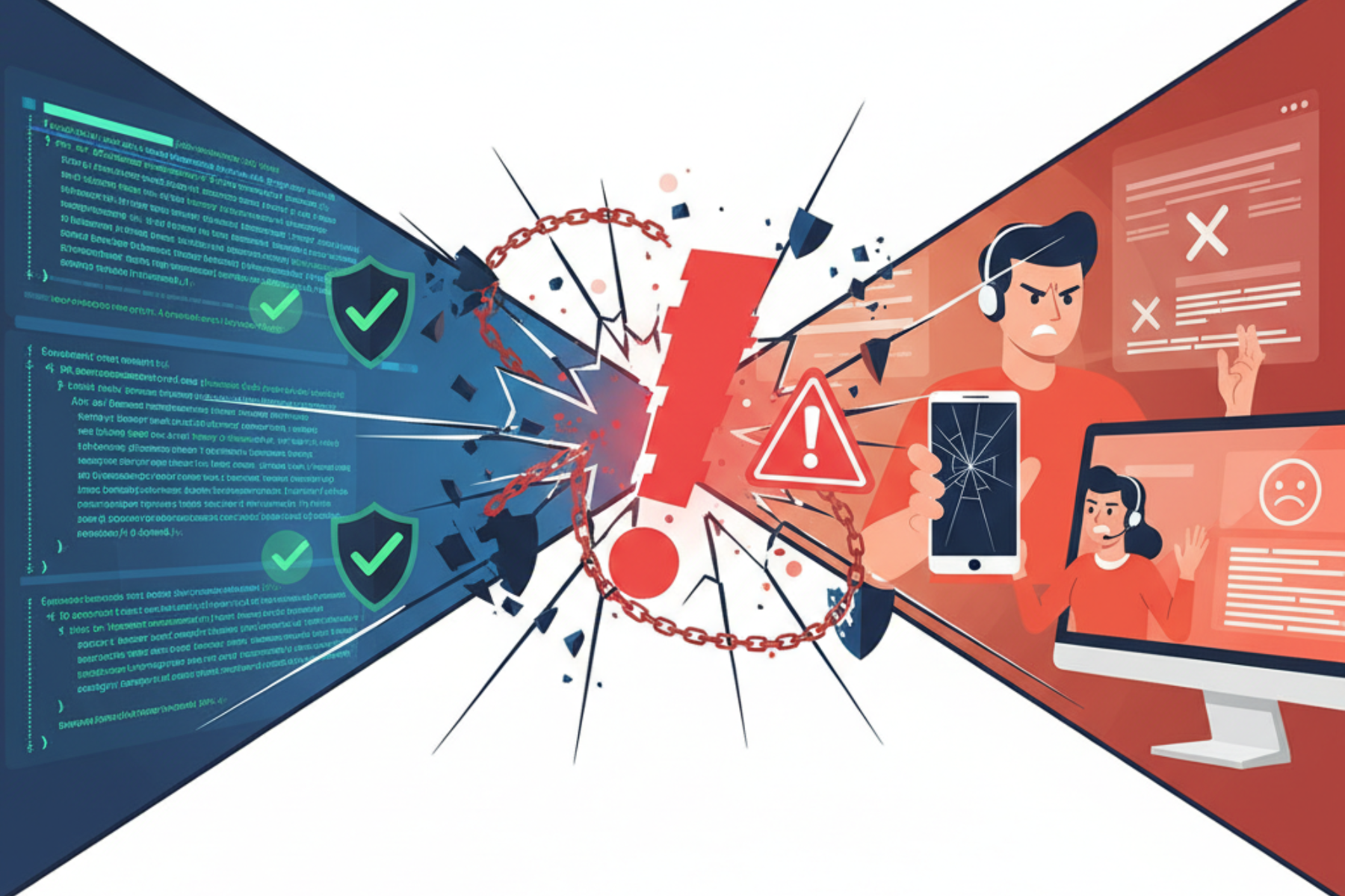
When you put out some software, and it seemed fine during testing, but then users start complaining that stuff isn’t working right. Those issues slipped past your quality checks completely. I guess a lot of teams just don’t realize how often bugs escape like that.
Its the ones that make it to customers that really stand out, not what your QA catches inside. Fixing them after launch is such a hassle. They mess with people’s trust in the whole product, too. And it kind of shows where the testing could be better, you know.
The good teams figure out those problems early on. They stop them before they blow up. Having a solid testing plan from the start helps a ton.
What Are Escaped Defects?
These problems cost money directly through support requests and indirectly through lost customer trust.
Defining Escaped Defects in Software Testing
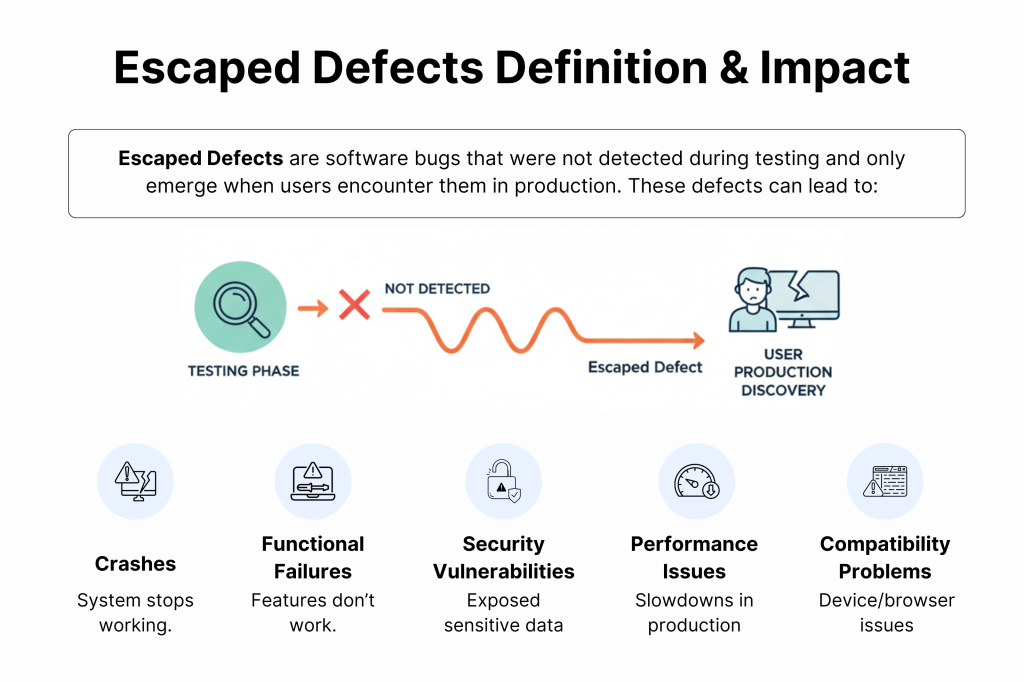
A missed defect basically means a software bug that slips through testing and only shows up when customers find it after the software is out there. I think the term escape really highlights how these bugs manage to avoid detection during quality checks.
Testing teams handle all kinds of tests right before the product launches. You know, unit tests, integration tests, those system tests as well.
The main idea is to spot bugs early on and catch them before they cause trouble.
Common types of escaped defects include:
- Crashes that happen when certain users are using the program
- Traits that don’t work for a certain set of inputs
- Security holes that let user data leak out
- Slowdowns in performance in production environments
- Problems with compatibility with some devices or browsers
The Cost of an Escape: Why Definitions Matter
Organizations track defect escape rates to assess their testing and quality assurance processes. This metric shows how many bugs slip through compared to those caught internally.
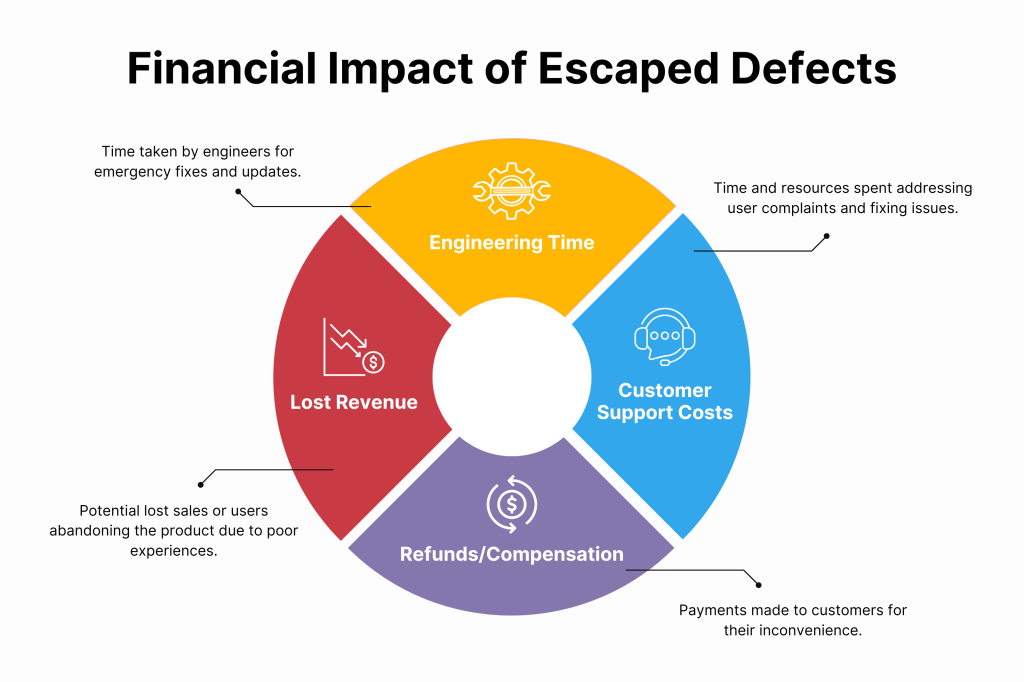
Financial impacts of escaped defects include:
- Customer support costs for handling complaints
- Engineering time spent on emergency fixes
- Lost revenue from dissatisfied customers
- Refunds or compensation payments
Users might use a competing product if they identify bugs, or they could post a negative review. It is easier to communicate the goals of improvement when there is a definition of what is considered good.
How to Calculate and Track Escaped Defects
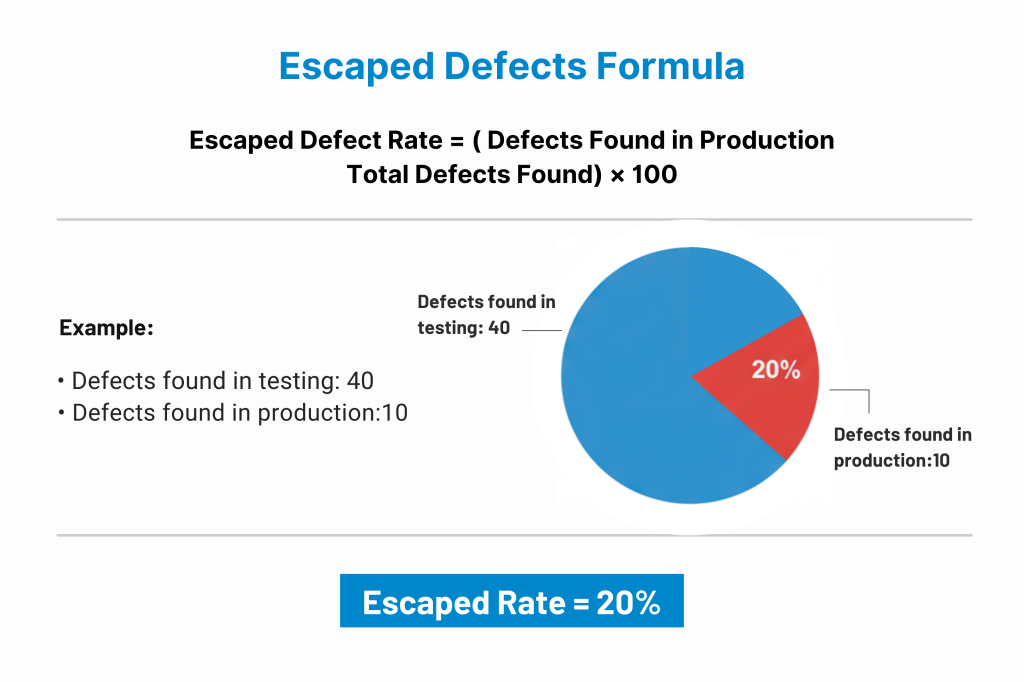
The defect escape rate formula divides the number of bugs found in production by the total number of defects discovered across all testing phases.
The Escaped Defects Formula
That is kind of the main idea behind tracking escaped defects, figuring out how well the testing worked. The formula for the defect escape rate is pretty simple; it divides the bugs found in production by the total defects from all testing phases.
So, the escaped defects formula goes like this. Defect Escape Rate equals the number of defects escaped to production divided by the total number of defects, then times 100. The top part counts just the ones that users or monitoring find after release.
For instance, say a team finds 40 bugs during testing, and then 10 more pop up after release. That would make the rate 10 over 50 times 100, which is 20 percent.
Data Collection: Where to Find the Numbers
Bug tracking systems, customer support tickets, and monitoring tools that find mistakes in real time all cause production problems. Every defect found during the pre-production phase must be logged in the defect management system by the testing teams.
The testing process gets information from a number of different places. Unit tests, integration tests, and test cases run during QA give you a count of bugs before the software goes live.
It is a good practice for companies to have a centralized system where bugs can be monitored throughout all stages of testing, from development, system testing, user acceptance testing, to production. The defect escape rate metric is less accurate and useful without full data collection.
The Importance, Limitations, and Acceptable Rates of Escaped Defects
Escaped defects are a big problem because they mess up the software quality overall. They also make users unhappy and slow down testing productivity, too. I thinkthat’ss why teams need to get what this metric really means.
Why This Metric Is Critical for ROI
Bug escape rates are important testing benchmarks because they show how many bugs pass testing and enter production instead of being caught earlier. Every bug found in production costs more to fix than in development.
Live software bugs are expensive and a nightmare for teams and customers. Emergency fixes, customer complaints, and production issues waste product-improvement time and resources.
Bugs in the software do more than just cost money. They really hurt how customers feel about the company. Like, trust gets damaged right away, and the whole brand might take a hit for a while.
What Is an Acceptable Defect Rate?
As regards a defect escape rate, there is no industry-wide acceptable standard; it relies on the industry and the level of difficulty. Highly critical industries, like medical and aerospace, require a very low defect escape rate due to concerns over human life.
Using historical data as a starting point helps you set realistic goals. Most businesses think that rates below 5% to 10% are fine for normal business uses.
Most of the time, mission-critical systems aim for rates below 2%. The key is to find a balance between quality goals, development speed, and limited resources while keeping customer satisfaction levels high enough to meet business goals.
Breakdown, Filtering Options, and Related Metrics
Teams have to figure out how to handle those defects that slip through, you know, the ones that escape. Sorting them and looking at patterns seems important for making processes better.
We think tracking defects based on priority levels is one way to do it. Then, comparing those to other performance stuff, like key indicators, can show where the quality problems are coming from.
Breaking Down Defects by Severity and Module
Analyzing escaped defects by priority level helps teams understand which problems matter most to users.
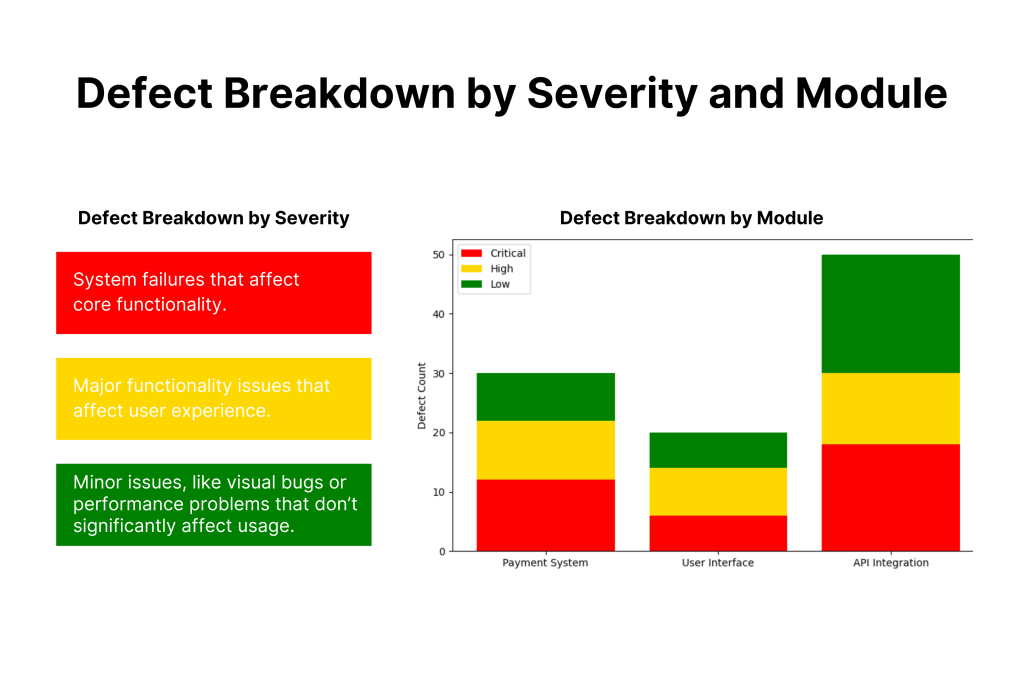
Teams should also break down defects by module or component. This approach reveals which parts of the software have the most quality issues. A payment module with frequent escaped defects needs more test coverage than stable features.
Filtering options include:
- Team or squad
- Product area
- Customer segment
- Release version
- Time period
Keeping track of defect density and escaped defects together gives you a better idea of the quality of the code. When there are a lot of defects in certain modules, it shows where testing should focus. Teams can look at these numbers alongside speed metrics to make sure that speed doesn’t hurt quality.
Filtering Noise from the Data
Minor and cosmetic defects can distort quality measurements if teams don’t filter them properly. A team that counts every small visual glitch will show high defect numbers even when core functionality works well.
Teams should define escaping defects. Track critical, high-priority user experience problems. Exclude or monitor low-impact cosmetic concerns.
Filtering by environment helps teams separate staging and production concerns. Staging environment flaws shouldn’t be considered escaped defects because consumers never saw them. Escapes are just manufacturing problems that affect real consumers.
Multiple filters in DevOps metrics dashboards help teams find useful data. Teams may skip known issues, filter by client tier, or segment deployment frequency.
Escaped Defects vs. Defect Removal Efficiency (DRE)
Defect Removal Efficiency measures pre-release defect detection. The calculation divides testing defects by total defects. If a team catches 95 defects internally and 5 escape, its DRE is 95%.
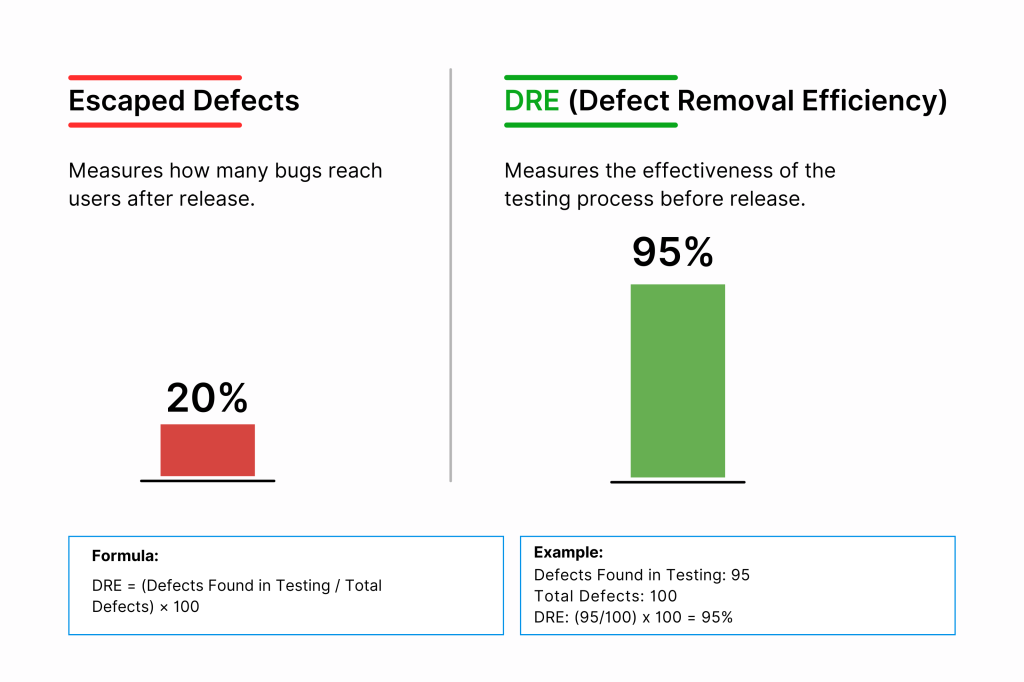
Defect management KPIs include DRE and escaped defects. Both metrics provide a complete quality process picture for teams. Low DRE and high escaped defects indicate serious test coverage gaps.
Key differences:
| Metric | What It Measures | Best Used For |
| Escaped Defects | Total bugs reaching users | Understanding customer impact |
| DRE | Testing effectiveness | Evaluating internal processes |
Strategies to Improve and Prevent Escaped Defects
Adopting a Shift Left Testing Strategy
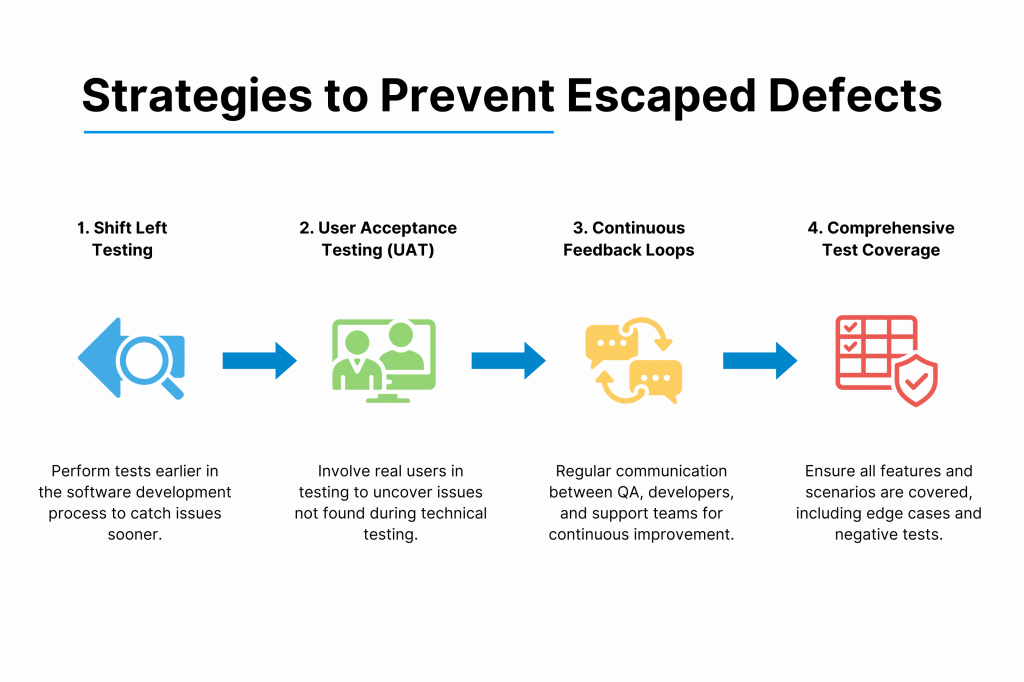
Shift left testing refers to verifying quality at the beginning of the process of software development, as opposed to when the process is completed. Prior to writing code, testing team members attend planning sessions to discuss requirements, looking for aspects that are not clear.
They go to design reviews to make sure that the technical plans fit the needs of the users. During coding, software testers work with developers to do unit testing and integration testing on new features right away.
Strengthening User Acceptance Testing (UAT)
User acceptance testing lets real users try out software before release. Users test the product in real-world situations to see if it works. Technical testing may miss issues because real people use software differently than testers expect. UAT finds them.
Short cycles in agile project management improve UAT. Every sprint can include UAT sessions to test new features. Developers get quick feedback to fix issues before moving forward.
Teams should track what users find during UAT and compare it to defects from other testing strategies. If users keep finding bugs that automated tests missed, the test coverage needs improvement.
Key Use Cases and Impact on Quality Assurance
If they understand escaped defects, teams may find the problem with their testing. That could improve software quality assurance, you know. I think using that data to improve testing would help. Releases would feel safer and more confident.
Optimizing the QA Process Based on Escape Data
Teams analyze escaped defect patterns to find gaps in their QA and testing process. When defects consistently slip through specific testing phases, it signals where additional test coverage is needed.
Quality assurance teams track which types of bugs escape most often. For example, if integration defects frequently reach production, teams might add more automated integration tests. If user interface bugs escape, they might increase manual exploratory testing time.
Impact on Release Speed and Confidence
The whole team has to slow down if too many bugs get through testing. To be safe, they end up adding more checks and reviews, which means it takes longer for users to get new features.
Here are some reasons why it’s important to keep bugs to a minimum:
- Updates that happen faster: You can release new features much faster if you trust your testing to find bugs.
- Less Stress: Teams that don’t have to worry about bugs escaping every time they launch something new.
- Better Results: Keeping an eye on these numbers shows that fixing your testing process really does help you get things done faster.
Continuous Improvement and Further Resources
Creating a Feedback Loop Between Support and Dev
Support teams talk to customers every day and hear about problems that developers don’t see. Making a direct connection between these groups helps fix problems faster and keeps them from happening again.
Companies that implement small and incremental changes based on real feedback are the ones that benefit the most from the plan they are using for continuous improvement initiatives.
Support tickets should consist of plenty of information regarding what the customer was attempting to accomplish, what occurred, and how frequently the situation arises.
Tools to Automate Defect Tracking
Tools to Automate Defect Tracking. Tracking defects by hand wastes time. You need a tool that connects your developers and your QA team in one place.
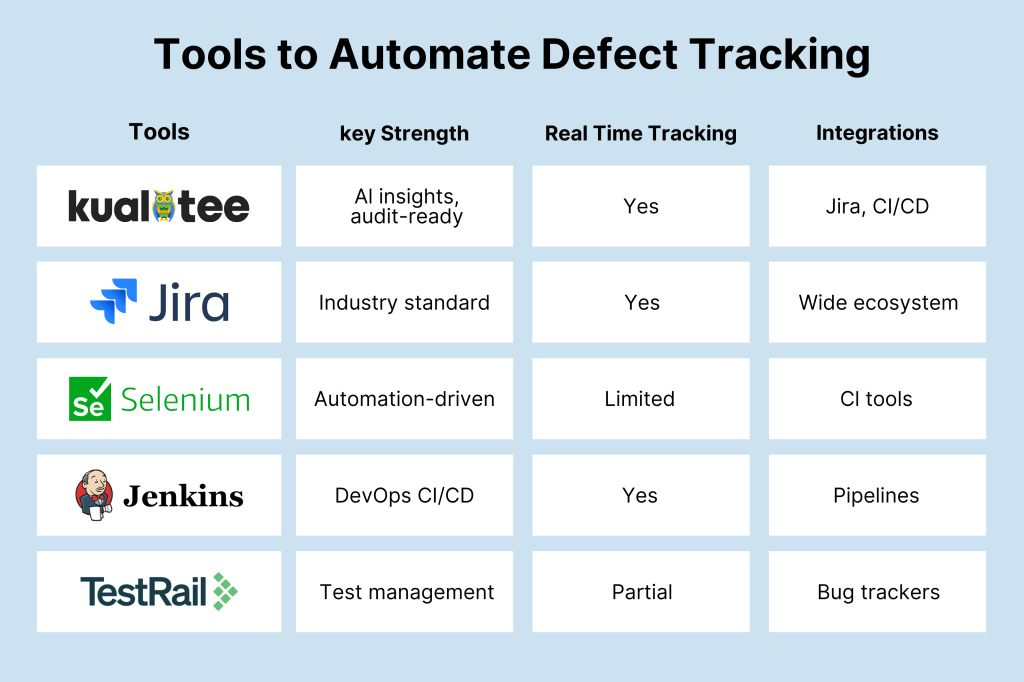
Kualitee lets you manage test cases and track defects in real-time. We integrate with Jira, Selenium, and Jenkins to help you catch bugs before your customers do.
Conclusion
Software bugs are inevitable in development, but figuring them out doesn’t have to be so difficult.
Keeping track of how many make it to production or whatever the escape rate is, and investigating why, can help. Shift Left testing can catch issues early, and root cause analysis can help identify them. Everything contributes to product improvement.
Perfection is impossible, so maybe focus on improving gradually. Pick a baseline for your workflow and tweak one part to see if it makes you feel more confident pushing code live.
Since zero bugs are impossible, the key is spotting them before users do. Sometimes it’s hard to measure progress without overcomplicating things. However, starting small may help.
FAQ
What are the top 3 types of escaped defects?
Edge Cases (unusual user actions), Environment Issues (differences in configuration between test and live servers), and Integration Failures (bugs caused by external APIs or tools) are the most common ways to get out of a situation.
Who is responsible for escaped defects?
The whole group. QA people oversee testing processes while the developers develop code, and the product manager defines the requirements. Blame games between individuals cause delays; work towards improving the process for everyone.
What is a good escaped defect rate?
Most software teams are healthy if their rate is below 10 to 15%. But for important systems like banking or healthcare, the goal is almost zero.