



Teams pick Zephyr for one reason. They already use Jira, and Zephyr slots right in. The test data lands next to everything else.
Then the renewal comes around. You look at the bill and notice you are paying for Jira users who never open a test case. The cost tracks your Jira base, not your QA team. The AI only works inside Jira, and the monthly allowance runs out fast. Zephyr also cannot run by itself. On big projects, some testers say it gets sluggish.
That is usually the point where people start hunting for a Zephyr alternative. No single tool wins for everyone. Your pick depends on team size, how deep you are in Jira, budget, AI needs, on-premise requirements, integrations, how much you automate, and how your team likes to report and collaborate.
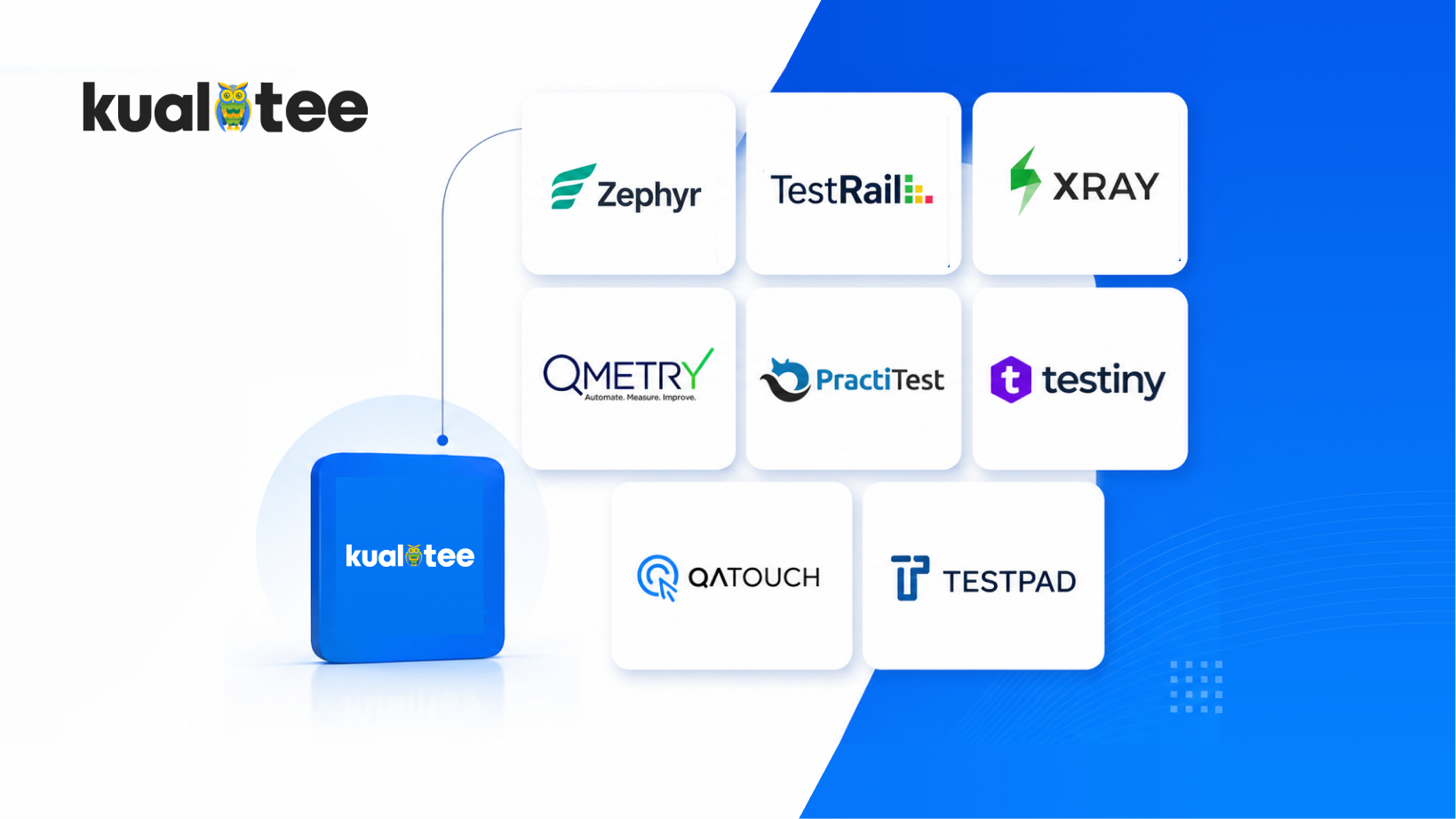
This guide covers Kualitee plus seven of the best Zephyr alternatives in 2026.
Quick Answer: What Is the Best Zephyr Alternative?
Short version, if you want to skip ahead:
- Kualitee: Best overall Zephyr alternative.
- TestRail: Best for established, enterprise test management.
- Xray: Best for teams deeply invested in Jira.
- QMetry: Best for AI-powered test management.
- PractiTest: Best for enterprise collaboration and traceability.
- Testiny: Best for reducing testing timelines.
- QA Touch: Best for test planning and mind mapping.
- Testpad: Best for checklist-based and exploratory testing.
Best Zephyr Alternatives at a Glance
| Tool | Starting Price | Deployment | Jira Dependency | AI | Best For |
| Kualitee | $12/user/month | Cloud + on-prem | No | Yes, Hootie AI | AI-powered standalone test management |
| Zephyr | From $10/user/mo (Jira tier) | Jira-based | Yes | Yes, Jira-locked | Jira-native teams |
| TestRail | ~$38/seat/month | Cloud + on-prem | No | Yes | Enterprise test management |
| Xray | From ~$10/mo (Jira tier) | Jira | Yes | Yes | Jira / BDD teams |
| QMetry | Custom quote | Cloud / Enterprise | Optional | Yes | AI-powered testing |
| PractiTest | ~$49/user/month | Cloud | No | Yes | Enterprise collaboration |
| Testiny | ~$18.50/user/month | Cloud | No | Yes | Small and growing teams |
| QA Touch | From $39/mo (10 users) | Cloud | Integrations | Yes | Test planning |
| Testpad | From $49/mo | Cloud | No | No / limited | Checklist-based testing |
Why Are Teams Looking for a Zephyr Alternative?
Zephyr does the job. But a few things keep pushing teams to look around before the next renewal. Here is what shows up most.
Jira Dependency
Zephyr’s data model lives inside Jira. If Jira is your home base, fine. If you want testing to work outside it, or you want the option to move later, that is a problem.
Your test management goes wherever Jira goes. You do not get a say.
Cost at Scale
Zephyr charges against your whole Jira user count. Not the number of people who actually run tests. So 5 testers on a 50-seat Jira instance pay for all 50 seats. Then add the Jira license underneath. The real bill lands well above the sticker price. QA leads call this out as the top budget surprise.
Limited Standalone Flexibility
Some teams just want test management that stands alone. Maybe QA reports on its own. Maybe not everyone who tests needs a Jira seat. Maybe you want one tool you can deploy without a second product under it. Zephyr cannot do any of that. It needs Jira to exist.
UI and Performance Concerns
Projects grow. Test libraries get big. The workflow starts to drag. Reviewers in 2026 mention slow load times and execution screens that lag on large projects. Run high test volumes in daily sprints and that friction adds up fast.
Seat price does not show it.
AI and Automation Requirements
QA teams want more than a filing cabinet for test cases now. They want AI that writes test cases, automated execution, smarter reports, clean automation hooks, and faster test maintenance. Zephyr has AI. But it only runs inside Jira, and the allowance can be tight.
Hard to build that into a real CI/CD pipeline.
Different Teams Need Different Workflows
No tool is perfect for everyone. A five-person startup and a 500-person enterprise want different things. A Jira-first shop and a multi-tool shop want different things. So the goal here is simple. Match the tool to how your team actually works.
Kualitee & the 7 Best Zephyr Alternatives in 2026
1. Kualitee
Best for: Overall Zephyr alternative, standalone and AI-powered test management
Kualitee runs on its own. No Jira license needed underneath it. That one choice is why it tops this list for most teams.
You get test case management, test execution and test cycles, and requirements management with traceability. Defect management is a native module, built in. So you are not borrowing Jira issues to log bugs. It all sits in one tool.
Kualitee also ships Hootie AI. It writes test cases from your steps, or even from a screenshot of your UI, and it helps run and maintain tests.
Deployment is cloud or on-premise from the entry tier. No Jira Data Center required. Automation hooks cover GitHub, GitLab, Jenkins, Azure DevOps, Selenium, Cypress, and Playwright. Reporting and dashboards come standard.
Two-way Jira sync is available if you still want it, but it is optional.
Kualitee pricing starts at $12/user/month, or $108 a year. There is a free Growth plan for 3 users with Hootie AI included.
Every paid plan comes with free assisted migration, so Kualitee’s team moves your Zephyr data for you instead of dumping it in your lap.
Pros: Runs standalone, native defect module, AI on the free tier, cloud and on-premise, free migration.
Cons: Smaller community than the old incumbents. Jira-first teams may not need the standalone setup.
Who should choose Kualitee: Teams that want off Jira-dependent test management while gaining AI, flexible deployment, and test plus defect management in one place.
Kualitee vs Zephyr: Kualitee runs alone, tracks bugs natively, and puts AI on a free tier. Zephyr needs Jira, borrows Jira issues for bugs, and keeps AI locked inside Jira.
2. TestRail
Best for: Enterprise test management
TestRail is one of the oldest standalone test management tools, and it earns its name on planning, test runs, and reporting. It does not need Jira, though it connects to it. You get detailed dashboards, solid automation hooks, and both cloud and on-premise (server) options.
Pricing starts around $39 per seat per month for Professional. Enterprise runs about $78 per seat per month for things like SSO and versioning.
TestRail has no free tier, just a trial. On-premise needs at least 10 seats.
Pros: Mature, strong reporting, trusted at scale.
Cons: Gets pricey as you grow. No free plan. Some reviewers mention a dated feel and slow performance on large projects.
Who should choose it: Bigger teams that want a proven standalone tool and can pay for it.
TestRail vs Zephyr: Both handle serious test management. TestRail stands alone. Zephyr lives in Jira.
3. Xray
Best for: Jira-native and BDD/Cucumber teams
If testing has to live in Jira, Xray is the obvious pick. It stores tests, plans, executions, and defects as native Jira issues, so nothing needs syncing to a second system. Requirements traceability is strong. Preconditions are built in. Cucumber and Gherkin support is first-class for BDD teams.
Xray uses the Atlassian Marketplace model. It starts around $10 a month for up to 10 Jira users, billed against your whole Jira tier. So the same cost pattern as Zephyr shows up here.
Pros: Deep Jira integration, great for BDD, native traceability.
Cons: Same Jira-tier billing trap. You are locked into Atlassian.
Who should choose it: Teams already all-in on Jira that want testing to stay there.
Xray vs Zephyr: Both are Jira-native add-ons with similar pricing. Xray leans harder into BDD and Jira-issue testing.
4. QMetry
Best for: AI-powered test management
QMetry calls itself an AI-enabled quality platform, and that is its strong suit. The AI writes test cases from requirements and user stories. It also flags flaky tests and helps with defect triage.
Furthermore, test execution, requirement management, defect tracking, and predictive analytics is also covered. It works inside or outside Jira.
Pricing is quote-based. Third-party sources cite around $720 per user per year for the enterprise version, so it sits at the higher end.
Pros: Strong AI, enterprise scale, runs with or without Jira.
Cons: Heavy for small teams. Pricing is opaque.
Who should choose it: Large, structured QA teams that want AI-driven testing at scale.
QMetry vs Zephyr: QMetry has deeper AI and can run outside Jira. Zephyr is lighter but Jira-bound.
5. PractiTest
Best for: Enterprise collaboration and traceability
PractiTest is a standalone platform built around end-to-end test management. It links requirements, tests, test sets, and issues in one place, with strong traceability and flexible custom fields. Reporting and dashboards are a highlight. Compliance-heavy teams mostly like it.
Pricing starts around $49 per user per month for the Team plan, which includes all core modules from the first seat.
Pros: Full traceability, good for compliance, all modules included.
Cons: Higher per-seat cost. Cloud only.
Who should choose it: Enterprises that need tight traceability and cross-team collaboration.
PractiTest vs Zephyr: PractiTest is a full standalone platform with native requirements and issues. Zephyr leans on Jira for that.
6. Testiny
Best for: Small and growing QA teams
Testiny is a newer, lighter tool that leans on speed and ease of use. It covers test case management, test plans and runs, along with reporting. It pulls in automation results from Playwright, Cypress, Selenium, and JUnit.
Testiny connects to Jira, GitHub, GitLab, Linear, and Azure DevOps without needing them as your system of record. It is EU-hosted, and there is a self-hosted server option.
Pricing starts around $18.50 per user per month. There is a free version for small teams.
Pros: Clean, fast, affordable, free tier, easy import from Zephyr and others.
Cons: Newer product. Still filling out some features.
Who should choose it: Small or growing teams that want to cut testing timelines without heavy setup.
Testiny vs Zephyr: Testiny is standalone and simpler. Zephyr is more powerful but tied to Jira.
7. QA Touch
Best for: Test planning and visualization
QA Touch is an AI-driven test case management tool with a standout feature: mind mapping. It lets you visualize test coverage and plan work. It also has test case management, built-in bug tracking, custom timesheets, detailed audit logs, and reporting, plus Jira and GitHub integrations.
Pricing starts at $70 a month for 10 users on the Professional plan. The Unlimited plan is $450 a month for 30 users.
Pros: Mind mapping, good collaboration, fair team pricing.
Cons: Some reviewers say the mobile experience could be better.
Who should choose it: Teams that plan visually and want test management plus planning together.
QA Touch vs Zephyr: QA Touch is standalone, with mind mapping and native bug tracking. Zephyr relies on Jira.
8. Testpad
Best for: Checklist-based and exploratory testing
Testpad works differently. Instead of heavy test-case structures, it uses simple outline-style checklists anyone can pick up in minutes.
It is built for exploratory testing, BDD-style checks, and light manual testing. You can bring in guest testers without buying extra licenses, which is nice.
Testpad runs standalone, with reporting and basic integrations.
Pricing starts at $49 a month for the Essential plan (3 users), and scales by team size.
Pros: Very easy to use, fast, great for exploratory and manual testing, guest testers included.
Cons: Little to no AI. Not built for large structured suites or automation-heavy teams.
Who should choose it: Teams that want simple, checklist-based testing without the weight of a full platform.
Testpad vs Zephyr: Testpad is light and standalone. Zephyr is structured and Jira-based.
Kualitee as a Zephyr Alternative
Here is where it gets specific. If you want off Zephyr, this is why Kualitee tends to be the best place to land.
Why Choose Kualitee Over Zephyr?
Kualitee is a standalone test management platform. No Jira license underneath it. That removes the highest hidden cost in the Zephyr setup right away. You also get cloud and on-premise deployment from the entry tier, built-in AI with Hootie, and native defect management instead of borrowed Jira issues.
Everything sits in one place. Test case management, test execution, defect management, requirement traceability, reusable test repositories, and release management. Automation hooks cover the usual CI/CD stack. Collaboration and reporting are built in.
There is also a free tier to start with, and free migration help on every paid plan. Kualitee costs $12 per user per month, with a free Growth tier, Hootie AI, standalone cloud and on-premise deployment, native defect management, and free migration support.
Kualitee vs Zephyr: Feature-by-Feature Comparison
| Feature | Kualitee | Zephyr |
| Standalone platform | Yes | No / Jira-dependent |
| Jira required | No | Yes |
| Cloud deployment | Yes | Yes |
| On-premise | Yes | Enterprise / Data Center dependent |
| AI | Hootie AI | AI capabilities |
| Test case management | Yes | Yes |
| Test execution | Yes | Yes |
| Defect management | Native | Jira-based |
| Requirement traceability | Yes | Yes |
| Automation | Yes | Yes |
| Free tier | Yes | Trial-based |
| Migration assistance | Yes | (not offered) |
Who Should Choose Kualitee?
- Teams that do not want Jira dependency
- QA teams with 5 to 100 testers
- Teams looking for lower total cost
- Organizations that need on-premise deployment
- Teams that want built-in AI
- Teams that want test management and defect management in one platform
- Teams looking to migrate from Zephyr
Who Should Stay With Zephyr?
Being straight here matters. Zephyr is still a good choice when:
- Jira is already deep in the organization
- Your team leans hard on Jira-native workflows
- Your Zephyr processes are mature and working
- Zephyr-specific BDD and Cucumber workflows are critical to you
If that sounds like you, switching may cost more effort than it saves.
How to Choose the Right Zephyr Alternative
Match the tool to your situation. Here is the quick way to decide.
Choose Kualitee if: You want a standalone platform, AI-assisted testing, cloud or on-premise deployment, lower Jira costs, native defect management, and migration help. That covers most teams leaving Zephyr over cost and flexibility.
Choose Xray if: You are all-in on Jira and need BDD and Cucumber inside it.
Choose TestRail if: You need mature enterprise test management with deep reporting and can absorb the seat cost.
Choose QMetry if: AI-driven testing and enterprise quality orchestration are your top priorities.
Choose Testpad if: You want simple, checklist-based testing and exploratory work without heavy structure.
The rest fit narrower needs. PractiTest for compliance-heavy traceability. Testiny for small, fast-moving teams. QA Touch for visual test planning.
Start with one question. Does your test management have to live inside Jira? That answer alone rules half the list in or out.
How to Migrate From Zephyr to Kualitee
Moving off Zephyr sounds scary. It is mostly mapping and checking, not manual re-entry. Zephyr data exports cleanly, and Kualitee gives you free assisted migration on every paid plan. Most teams finish in one to two weeks. Here is the process.
- Export your Zephyr test data. Pull your test cases, folders, execution history, custom fields, and statuses out of Zephyr with a CSV export or the REST API. Grab everything so nothing gets lost in the move.
- Map your test structure. Match your Zephyr folders, suites, and test cycles to Kualitee’s project and folder setup. Ask Kualitee support for the mapping template to speed this up.
- Import your test cases. Load the data into Kualitee with the bulk CSV importer or the API. Got 1,000-plus test cases? Use the free assisted migration and let the support team run the import for you.
- Reconnect your integrations. Reconnect Jira, GitHub, GitLab, Azure DevOps, Slack, and whatever else you use. Kualitee sets up its native two-way Jira sync during onboarding.
- Verify your migrated data. Check your test cases, execution history, users, permissions, dashboards, and integrations. Run one full sample test cycle in Kualitee before you switch off Zephyr. Keep the old instance in read-only mode until that sample passes. That way you always have a rollback point.
Zephyr Alternative Comparison: Which Tool Is Right for You?
| If you need… | Choose |
| Best overall Zephyr alternative | Kualitee |
| Standalone enterprise test management | TestRail |
| Jira-native test management | Xray |
| AI-powered quality management | QMetry |
| Enterprise collaboration | PractiTest |
| Simple modern test management | Testiny |
| Test planning and mind mapping | QA Touch |
| Checklist-based testing | Testpad |
Final Thoughts
Zephyr is still a solid tool for Jira-centric teams. If Jira is your center of gravity, it may be all you need. But it is not right for every QA team. The Jira dependency drives up cost, keeps AI boxed in, and rules out standalone deployment.
Considering other test management platforms? If you’re evaluating Zephyr alternatives, you can also compare how Zephyr stacks up against other testing solutions. Teams evaluating modern platforms may also want to explore Qase alternatives or Xray alternatives.
Standalone platforms give you more room to move. Of all the tools here, Kualitee is the strongest pick for teams that care about AI-assisted testing. As well as standalone deployment, flexible cloud or on-premise setup, lower cost, test and defect management together, along with real migration support.